Welcome to 2025, where the sales landscape is more dynamic than ever. Artificial intelligence (AI) has moved from a nice-to-have to a must-have for sales teams aiming to stay ahead. One of the most impactful applications is AI-powered lead routing, which ensures leads are assigned to the right sales rep at the right time, based on data-driven insights. This guide will walk you through what AI-powered lead routing is, why it’s critical in 2025, how it works, and how your team can implement it to boost efficiency and close more deals.
What Is AI-Powered Lead Routing?
AI-powered lead routing uses artificial intelligence to automatically assign leads to the most suitable sales representative. Unlike traditional manual methods or basic rules-based systems, AI analyzes data like lead behavior, company details, and rep performance to make intelligent decisions. For instance, if a lead from a high-revenue company visits your pricing page twice in 24 hours, an AI tool might route it to your top enterprise rep instantly. This precision sets AI apart, making lead assignment faster and more effective.
Learn more about sales automation here.
Why AI Matters in Lead Distribution (Especially in 2025)
Buyer expectations have evolved. Customers now expect near-instant responses, with studies showing that companies responding within one minute see a 391% increase in lead conversions. With leads flooding in from websites, social media, and email campaigns, sales teams can struggle to keep up. Intelligent lead distribution powered by AI solves this by:
- Prioritizing high-value leads based on lead scores and behavior.
- Routing leads in real-time to the best-fit rep, reducing missed opportunities.
- Balancing workloads by considering rep performance, availability, and region.
In 2025, as data volumes grow and sales technology advances, AI ensures your team stays competitive.
How AI Lead Routing Works
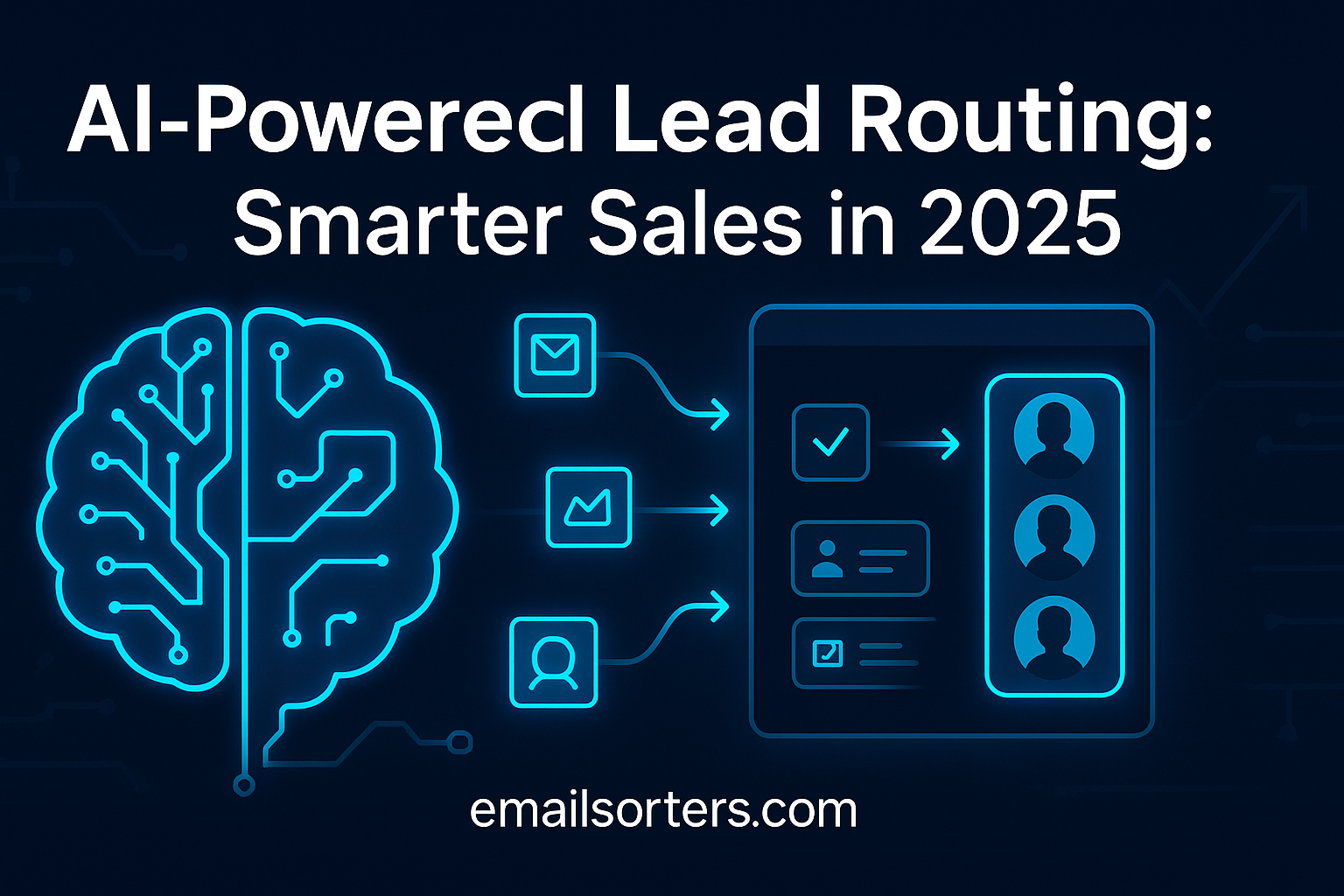
AI-powered lead routing follows a clear process to deliver results:
- Input Data: The system gathers data from your CRM, website analytics, and marketing tools. This includes firmographics (company size, industry, location), behavioral data (pages visited, time spent), and engagement history.
- AI Logic: Machine learning algorithms analyze this data to identify patterns. For example, the AI might determine that leads from tech companies with over 500 employees are best handled by senior reps.
- Output: Leads are assigned to the appropriate rep in real-time, ensuring prompt follow-up.
Example: A lead from a large enterprise visits your pricing page multiple times. The AI, using CRM lead management data, assigns it to your top enterprise rep within seconds, increasing the chance of conversion.
Benefits of Using AI for Lead Routing
Adopting AI-based sales tools for lead routing offers significant advantages:
- Faster Response Times: Real-time lead routing ensures reps contact prospects while they’re engaged, boosting conversion rates.
- Fairer Distribution: AI balances lead assignments based on rep performance and capacity, reducing burnout.
- High-Value Prioritization: Leads with the highest potential are prioritized, maximizing revenue.
- Error Elimination: Automation reduces manual mistakes like misrouting or duplication.
- Improved Focus: Reps spend less time managing leads and more time selling.
These benefits make lead assignment automation a game-changer for sales teams.
Best AI-Powered Lead Routing Tools in 2025
Choosing the right tool is crucial for successful AI-powered lead routing. Here are five top tools for 2025, each with unique strengths:
| Tool | Key AI Features | Ideal Use Case | Pricing Model | Strengths | Limitations |
| LeanData | Matches leads to accounts in Salesforce, identifies buying groups, reduces routing time by 99% | Large enterprises with complex sales | Custom pricing | Advanced lead-to-account matching, revenue orchestration | May be complex for small teams |
| Chili Piper | Real-time lead qualification, form routing, complex rule-based distribution | B2B companies automating qualification | Starts at $30/user/month | Integrates with multiple CRMs, transparent logs, SLA management | Setup time for custom workflows |
| HubSpot with AI Workflows | AI-powered lead scoring and routing within CRM | Small to medium businesses using HubSpot | Varies by HubSpot tier | All-in-one platform, user-friendly | May lack advanced features |
| Salesforce Einstein | Predictive lead scoring, account insights, opportunity scoring | Large enterprises using Salesforce | Included in Enterprise/Unlimited editions | Deep Salesforce integration, comprehensive AI | Expensive for smaller businesses |
| Freshsales with Freddy AI | Freddy AI for lead scoring, predictive dialing, forecasting | Small to medium businesses | Starts at $15/user/month | Affordable, user-friendly, strong AI features | Fewer advanced features than larger CRMs |
For a broader look at AI in sales tools, explore G2’s sales AI category.
How to Implement AI Lead Routing in Your Sales Stack
Ready to adopt real-time lead routing? Follow these steps:
- Audit Your Current Lead Process: Identify bottlenecks, such as slow response times or uneven lead distribution.
- Define Routing Rules and Data Sources: Decide what factors matter, like lead score, region, or rep expertise.
- Choose the Right Tool or CRM Add-on: Select a tool that integrates with your existing stack, like Salesforce or HubSpot.
- Train Your Team on the Workflow: Ensure reps understand the system and how to use it effectively.
- Test and Optimize Regularly: Monitor performance with KPIs like response time and conversion rates, tweaking as needed.
AI vs Rules-Based Lead Routing: What’s the Difference?
Understanding the difference between AI-powered lead routing and rules-based systems is key:
| Aspect | AI-Powered Lead Routing | Rules-Based Lead Routing |
| Decision-Making | Uses machine learning to adapt and learn from data | Relies on static, predefined rules |
| Flexibility | Highly adaptable to changing patterns | Rigid, requires manual rule updates |
| Complexity | Handles complex scenarios with ease | Best for simple routing needs |
| Best For | Teams with diverse leads and high volumes | Smaller teams or basic routing |
A hybrid approach—using AI for complex decisions and rules for simplicity—often delivers the best results.
Challenges and How to Overcome Them
Implementing AI-powered lead routing can face hurdles:
- Data Quality Issues: Poor data leads to poor routing. Ensure your CRM and data sources are clean and updated.
- Resistance to Change: Sales teams may resist new tools. Involve them early and provide thorough training.
- Overreliance on AI: AI should assist, not replace, human judgment. Maintain oversight to ensure alignment.
Tips: Start with a pilot program, set clear KPIs (e.g., response time, conversion rates), and involve your team from the start.
Final Thoughts
In 2025, AI-powered lead routing is transforming how sales teams operate. By automating and optimizing lead distribution, it ensures your team engages the right leads at the right time, driving higher conversions and revenue. Don’t get left behind—explore sales technology 2025 trends and start implementing AI today.
FAQ
Can AI route by language preference?
Yes, many AI tools can route leads based on language preferences by analyzing data like location or website interactions. Tools like Chili Piper and Salesforce Einstein support custom routing rules for such criteria.
How does AI improve lead response times?
AI routes leads in real-time based on data, ensuring reps contact prospects quickly, often within minutes, which significantly boosts conversion rates.
Is AI lead routing suitable for small businesses?
Absolutely. Tools like Freshsales and HubSpot offer affordable, user-friendly options for small businesses to leverage AI in sales.