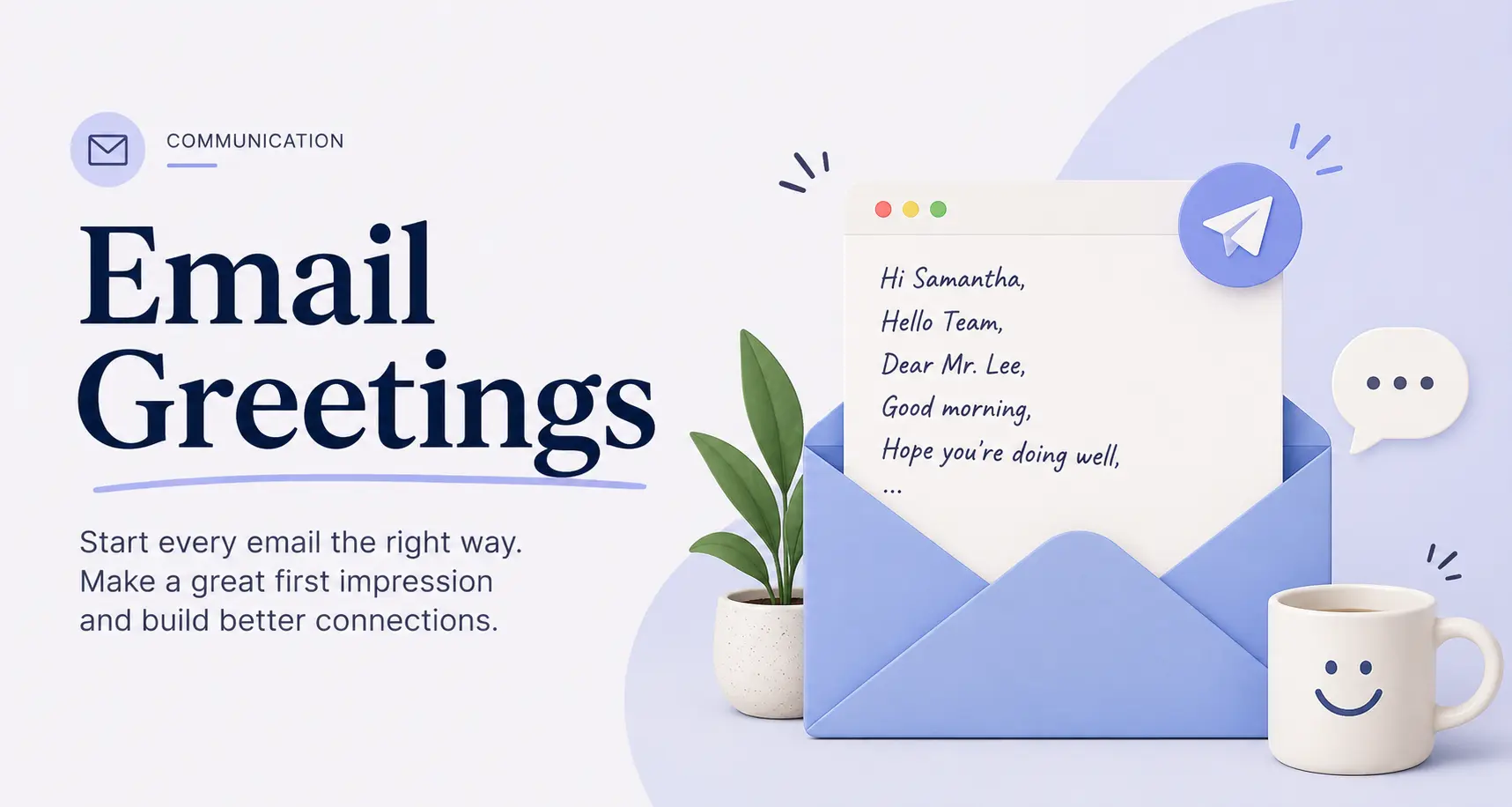
Email greetings set the tone for your entire message. The right greeting depends on your relationship with the recipient and the context: formal, semi-formal, or casual. Common professional greetings include “Hello [Name],” “Dear [Title + Last Name],” and “Greetings.” Informal settings work well with “Hi [Name]” or “Hey.” Always include a greeting, match it to your context, and end it with a comma, not an exclamation mark.
Your email greeting is the first thing a reader sees before your actual message. Most people default to “Hi” without thinking about whether it fits the situation. That one small word can shape how your entire email gets received.
Whether you are writing a business email to a hiring manager, a quick note to a coworker, or a follow-up to a client, the right email salutation tells the reader you paid attention. This guide gives you ready-to-use email greeting examples organized by situation so you can find the right one fast.
What Is an Email Greeting?
An email greeting is the opening salutation at the start of your message. It usually includes a polite word or phrase followed by the recipient’s name. For example: “Hello Sarah,” or “Dear Mr. Johnson,”
It is not the same as your opening line. The greeting is just the salutation. The opening line is the first sentence of your email body, such as “I hope this email finds you well.”
A well-chosen greeting signals respect and sets the tone for the entire message. A poorly chosen one can make your email feel rude, outdated, or unprofessional before the reader even reaches your point.
Grammar tip: Always end your email greeting with a comma. Not an exclamation mark. Not a period. A comma.
- Correct: Hi Sarah,
- Incorrect: Hi Sarah!
Best Professional Email Greetings
Professional email greetings are used in business emails, first contact with clients, formal requests, and any situation where the tone needs to stay respectful and polished.

Here are the most reliable professional options:
- Hello [First Name] – Use when you know the person but want to stay slightly formal. Works for colleagues, clients, and professional contacts.
- Dear [Title + Last Name] – Use for highly formal situations: emailing a professor, a senior executive, or a government official. Example: “Dear Dr. Patel,” or “Dear Mr. Hossain,”
- Good morning [Name] – Use when you know the email will be read in the morning. Warm, polished, and professional.
- Good afternoon [Name] – Works well for afternoon sends. Same logic as above.
- Dear [Full Name] – Use when you do not know the person’s gender or preferred title. Example: “Dear Jordan Clarke,” This is the preferred modern approach over “Dear Sir or Madam.”
- Greetings – A neutral, polished opener when you do not have a specific name or want to keep things general.
Outdated greetings to retire now:
“To Whom It May Concern” is widely considered impersonal today. Use “Dear Hiring Manager,” or “Hello Customer Service Team,” instead. “Dear Sir or Madam” is no longer inclusive or recommended in modern professional communication.
Formal Email Greetings for Job Applications
Job application emails need extra care. Your greeting is the first signal of your professionalism.
Use these greetings when applying for a job:
- Dear Hiring Manager, (when you do not know the specific name)
- Dear Ms. [Last Name], (when you know the contact is a woman)
- Dear Mr. [Last Name], (when you know the contact is a man)
- Dear [Full Name], (when gender is unknown; always preferred over guessing)
- Dear Dr. [Last Name], (for academic or medical roles)
Always research the hiring contact’s name if the job posting is important to you. A personalized greeting like “Dear Ms. Sultana,” signals effort that “To Whom It May Concern” never will.
Informal Email Greetings for Coworkers and Friends
Casual email greetings create a warmer tone. They work well when writing to coworkers you know well, close contacts, or friends.
Here are the best informal options:
- Hi [Name] – The most versatile casual greeting. Works in almost any non-formal setting.
- Hey [Name] – Very informal. Best for close coworkers or friends only.
- Hi there – Friendly without being too familiar. Use for light or general team messages.
- Hope you are well, [Name] – A warm, semi-casual opener. Works well in workplace emails that are not highly formal.
- Morning, [Name] – Relaxed and friendly. Best for short, quick emails to familiar contacts.

Research by Boomerang found that informal greetings like “Hi” and “Hey” generate higher reply rates than formal greetings. This does not mean you should use “Hey” in a formal business email. It means that in the right context, keeping your email opener warm and personal helps people respond faster.
The rule is simple: match your greeting to the relationship and the situation.
How Do You Greet Someone in an Email When You Do Not Know Their Name?
When you do not know the recipient’s name, your best options are:
- Dear Hiring Manager,
- Hello Customer Service Team,
- Dear Accounts Payable Team,
- Greetings,
- Good morning,
- Hello [Department Name],
Avoid “To Whom It May Concern.” It is technically correct but reads as cold and impersonal in today’s workplace email environment. Most recipients treat it the same way they treat a form letter.
If the email is important, spend two minutes on LinkedIn or the company website to find the right name. A personalized email salutation always outperforms a generic one.
Email Greetings for Group Emails
Group email greetings require a slightly different approach. You are addressing multiple people at once, so the greeting needs to feel inclusive.
Formal group greetings:
- Dear Team,
- Dear [Department Name] Team,
- Good morning, everyone,
- Dear All,
Informal group greetings:
- Hi everyone,
- Hey team,
- Hi all,
- Good morning, all,
One practical tip: if the group is small (two or three people), list their names. “Hi Sarah, Marcus, and Jenna,” feels more personal than “Hi everyone,” and increases the chance that everyone reads the message.
What Email Greeting Gets the Most Replies?
Data from Boomerang’s reply-rate research shows that informal greetings get more responses than formal ones. Greetings like “Hi [Name]” and “Hey [Name]” tend to outperform “Dear [Name]” in reply rates, especially in workplace and B2B email outreach.
According to 2026 email benchmarks from Instantly.ai, standard reply rates for B2B cold emails sit between 5 and 10 percent. Top-performing email senders using personalized openers push that figure to around 15 percent.
What does this mean for you in practice?
- In a familiar professional context, “Hello [Name]” or “Hi [Name]” will likely get faster replies than “Dear [Name]”
- In a formal context (legal, academic, first contact with a senior executive), the formality of “Dear [Title + Last Name]” still signals more respect
- In cold email outreach, personalization matters more than formality. A specific, relevant opener after the greeting drives replies more than the greeting word itself
The best approach: use the greeting that fits the context, then focus energy on writing a clear and respectful opening line after it.
How to Start an Email After the Greeting
The greeting is just the beginning. Once you write it, you need a strong opening line to carry your message forward.
The email opening line is the first sentence of your email body. It should briefly acknowledge the recipient or state your purpose.
Professional opening lines:
- I hope this email finds you well.
- Thank you for getting in touch.
- I am writing to follow up on our previous conversation.
- I wanted to share an update regarding [topic].
- Thank you for your prompt reply.
Casual opening lines for familiar contacts:
- Hope you had a great weekend!
- Just following up from our chat earlier.
- Quick question for you:
One thing to avoid: “How was your weekend?” can feel intrusive when writing to someone you have never met or barely know. Stick to a warm but purposeful opener for professional emails. If you want to know more about how email works as a communication tool, the Email Overview guide covers the essentials.
Email Greeting Mistakes to Avoid
Small mistakes in your email salutation can leave a bad impression before your message is even read. Here are the most common ones:
- Ending the greeting with an exclamation mark
- Fix: Use a comma. “Hi Sarah,” not “Hi Sarah!”
- Using “To Whom It May Concern”
- Fix: Use “Dear Hiring Manager,” or “Hello [Team Name],”
- Using “Dear Sir or Madam”
- Fix: Use “Dear [Full Name],” for gender-neutral professional communication.
- Misspelling the recipient’s name
- Fix: Double-check the spelling before hitting send. A misspelled name signals carelessness immediately.
- Using “Hi there” in formal emails
- Fix: “Hi there” is casual. For formal contexts, use “Hello [Name],” or “Dear [Title + Last Name],”
- Skipping the greeting altogether
- Fix: Always include a greeting. Jumping straight into the message body feels abrupt and impersonal, even in short emails.
- Using the wrong title (Mr. vs. Ms. vs. Mx.)
- Fix: When you are not sure, use the person’s full name instead of a gendered title. “Dear Jordan Smith,” is always safe.
Final Thoughts
Getting your email greeting right takes very little time but makes a real difference in how your message lands. A well-matched greeting tells the reader you respect them and understand the context. That trust carries through the rest of your email.
Here is a simple decision guide you can bookmark:
- Formal situation or first contact: use “Dear [Name]” or “Hello [Full Name]”
- Familiar professional contact: use “Hello [First Name]” or “Hi [Name]”
- Close coworker or friend: use “Hi [Name]” or “Hey [Name]”
- Unknown recipient: use “Dear Hiring Manager,” or “Greetings,”
- Group email: use “Hi everyone,” or “Dear Team,”
Once you choose the right greeting, follow it with a clear and short opening line. You are already ahead of most email writers.
If you want to go further than just your greetings, explore our email productivity tips for practical ways to write better emails, manage your inbox, and stay organized throughout your workday.