The technical workforce is undergoing a radical shift, particularly within EV maintenance roles where software proficiency is now just as critical as mechanical skill. The days of technicians wiping grease off their hands to answer a landline are ending. With the rapid adoption of Electric Vehicles (EVs) and smart grids, the modern technician acts as part engineer, part data analyst. While the hardware has advanced, communication workflows often remain stuck in the past.
Manual administrative work is the silent killer of productivity in service centers and engineering firms. Every minute a lead technician spends manually typing a service reminder or looking up a part number in a spreadsheet is a minute stolen from billable diagnostic work.
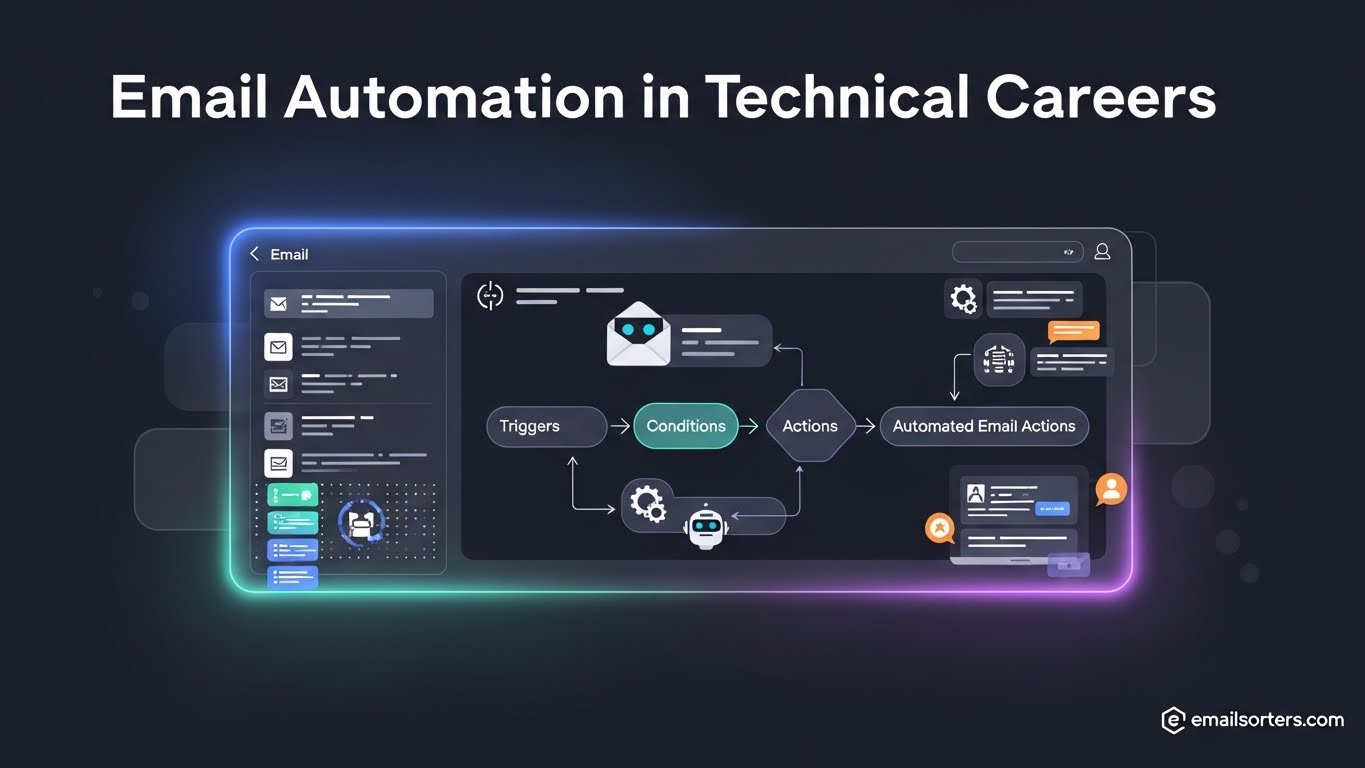
Email automation in technical careers is no longer a luxury; it is the operational standard required to handle the complexity of modern maintenance. By integrating Customer Relationship Management (CRM) tools with automated email triggers, technical teams can secure higher revenue, improved safety compliance, and stronger customer retention without adding administrative headcount.
This guide details exactly how automation changes the game for EV professionals and engineering teams.
Why Is Manual Communication Failing Modern Technical Teams?
Manual communication fails modern technical teams because it introduces human error, creates bottlenecks in fast-paced service environments, and wastes valuable technician hours on repetitive administrative tasks.
The cost of “doing it by hand” is higher than most service managers realize. In an EV workshop, timing is critical. High-voltage batteries require specific conditioning times, and parts supply chains are tighter than traditional auto parts. As companies expand their fleets, the scope of EV maintenance roles has grown to include data management, meaning technicians simply do not have time to manually email customers about backordered charging modules.
The Bottleneck Effect
When communication relies on human memory, systems break. A technician might finish a complex diagnostic on a Tesla Model S but forget to email the service advisor until the end of the day. That is four hours of lost approval time.
Automation eliminates this latency. A diagnostic tool can trigger an automatic status update the moment a job is marked “complete” in the system. This immediacy reduces the “dwell time” of vehicles in the shop.
The Compliance Risk
In technical fields, certifications expire. If a high-voltage safety certificate lapses because the reminder email sat in a draft folder and never went out, that technician cannot legally work. Automated systems track these dates and send escalating warnings to both the technician and management, guaranteeing 100% compliance.
Beyond compliance reminders, technicians need foundational skills that span high-voltage safety, diagnostics, and software-driven workflows. For readers exploring career paths in this space, an overview of EV technician training explains how to assess fit, the demand outlook, earning potential, and advancement routes—useful context for teams building automation-ready service operations. Understanding the talent pipeline helps managers pair the right training paths with the email/CRM automations described here.
How Does Email Automation Solve EV Maintenance Challenges?
Email automation solves EV maintenance challenges by syncing real-time vehicle data with communication tools, sending instant alerts for firmware updates, battery health checks, and service completions without human input.
EVs are computers on wheels. They generate massive amounts of data. The challenge for service centers is translating that data into customer communication. Automation bridges this gap.
The Automated Customer Lifecycle
Consider the standard customer journey in a modern EV garage. It needs to be professional from the start. Trust is currency. If your booking confirmation comes from [email protected], you lose credibility instantly. Setting up a professional email address (e.g., [email protected]) is the first step in establishing authority.
Once the professional identity is set, the workflow moves to automation:
- The Intake: A customer books a slot online. The system sends a calendar invite and a “Pre-Service Checklist” automatically.
- The Diagnosis: The technician inputs data into the tablet. If the brake fluid moisture is high, the system automatically emails the customer a quote for a flush.
- The Update: No more “calling to check in.” The system sends status emails at 25%, 50%, and 90% completion.
- The Handoff: When the bill is paid, the system emails a gate code for after-hours pickup.
This creates a high-touch experience with zero manual effort.
What Are the Best Automation Tools for Mobile Technicians?
The best automation tools for mobile technicians are mobile-first platforms that integrate email, calendar, and inventory management, allowing field agents to manage workflows directly from their smartphones.
Field technicians—those working on wind turbines, charging stations, or remote server farms—live on their phones. They cannot return to a desktop to check work orders.
Optimizing the Mobile Inbox
For a field tech, a cluttered inbox is a safety hazard. If they miss an “Emergency Stop” notice because it was buried under newsletters, the consequences are severe.
To manage this, technicians should use the best free email apps for Android or iOS that support “Smart Folders” or “Priority Inboxes.” These apps allow users to set rules: if an email contains “URGENT” or “downtime,” it pushes a loud notification. If it contains “newsletter,” it stays silent.
Crucial Features for Field Tools
- Offline Mode: Technicians often work in basements or remote areas. The app must queue emails and send them automatically once connectivity is restored.
- Voice-to-Text Integration: A tech with greasy hands cannot type. Good automation tools allow voice dictation that is automatically formatted into a professional email update.
- GPS Triggers: Some advanced tools send an automated “I’m on my way” email to the client when the technician’s phone GPS crosses a geofence near the job site.
How Can Engineering Teams Automate Internal Workflows?
Engineering teams automate internal workflows by implementing rule-based triggers that manage project status updates, inventory thresholds, and shift handovers, allowing engineers to focus on deep technical work.
Engineers and developers face a unique problem: distraction. Flow state is required for coding or circuit design. A constant ping of “Have you read this?” emails destroys focus.
Mastering the “Snooze” Strategy
Automation isn’t just about sending; it’s about sorting. Engineering leads should train their teams on how to snooze an email setup.
This function allows an engineer to defer non-critical emails. For example, a request for a “parts list review” arrives on Tuesday at 10:00 AM. The engineer is coding. They hit “Snooze until Thursday 2:00 PM.” The email vanishes and reappears at the exact moment the engineer has allocated for administrative tasks. This simple automation preserves mental energy for high-value problem solving.
Inventory and Shift Automation
- Parts Reordering: Connect your inventory database to your email. When the stock of IGBT transistors drops below 50 units, the system automatically emails the supplier a purchase order.
- Shift Handovers: Instead of a messy verbal pass-down, the outgoing engineer fills out a digital form. The system compiles the data and emails a structured PDF report to the incoming shift lead.
How Do You Structure Technical Emails for High Deliverability?
You structure technical emails for high deliverability by using clean HTML coding, responsive design for mobile viewing, and clear text-to-image ratios to ensure messages land in the primary inbox, not spam.
Sending an automated email is useless if it lands in the spam folder. Technical emails often contain attachments (PDF manuals, invoices) or links, which can trigger spam filters if not handled correctly.
The Technical Setup
To confirm your automated updates reach the customer, you must verify your HTML email setup. Plain text is safe, but it looks outdated. A properly coded HTML email allows you to include your branding, a clear “Approve Repair” button, and dynamic elements like a battery health progress bar.
But keep the code clean. Bloated HTML causes loading errors on mobile devices. Ensure your template is “responsive,” meaning it automatically adjusts the layout whether the customer is viewing it on a 27-inch monitor or a 5-inch smartphone screen.
Trust Factors
Spam filters look for engagement. If customers constantly delete your emails without opening them, your domain reputation suffers. To prevent this, ensure your content is highly relevant. Do not send a “Buy New Tires” email to a customer who bought tires last week.
What Is the Role of CRM in EV Service Centers?
The role of CRM in EV service centers is to centralize vehicle history and customer interactions, enabling data-driven automated campaigns for preventative maintenance and service retention.
A CRM (Customer Relationship Management) system acts as the “brain” of your automation strategy. It stores the truth about every vehicle in your care.
Data-Driven Retention
Using CRM data allows for hyper-specific automation.
- Scenario: A customer owns a 2020 EV. The manufacturer releases a critical firmware update for the thermal management system.
- Manual Way: Service advisor prints a list of 500 owners and calls them one by one.
- Automated Way: The CRM filters for “2020 Model Year” + “Not Yet Updated.” It sends a personalized email: “Urgent: Your vehicle requires a thermal update. Click here to schedule.”
Database Hygiene
A massive email list is a liability if half the people on it are annoyed. You must give customers control. Implementing a visible one-click unsubscribe link is mandatory. It lowers your spam complaint rate. If a customer sells their EV, they should be able to remove themselves from your list instantly. This keeps your open rates high and your domain reputation distinct.
What Does the Future of Technical Automation Look Like?
The future of technical automation involves AI-driven predictive maintenance where systems analyze vehicle telemetry to draft and send service recommendations before a component actually fails.
We are moving past simple “if this, then that” logic. The next generation of automation is predictive.
Predictive Maintenance Alerts
Imagine an EV fleet manager receiving this email: “Based on the voltage variance in Module 4 of Truck 12, battery failure is predicted within 200 miles. A replacement bay has been reserved for tomorrow at 8:00 AM. Click to confirm.”
No human wrote that email. An AI analyzed the telemetry, checked the workshop schedule, checked the parts inventory, and drafted the message. The human fleet manager just has to click “Yes.”
Smart Workflow Integration
Future tools will integrate even deeper. Technicians wearing Augmented Reality (AR) glasses will finish a repair, and the system will visually confirm the work is done via camera, automatically triggering the “Job Complete” email to the client without the tech ever touching a keyboard. This evolution proves that EV maintenance roles are no longer just about hardware; they are about mastering the flow of information.
Actionable Steps: How to Start Automating Today
You do not need a million-dollar budget to start. Follow this framework:
Phase 1: Audit and Clean
- Map out every email your shop sends manually.
- Identify the repetitive ones (Status updates, appointment confirmations).
- Clean your contact lists. Remove bounced emails.
Phase 2: Tool Selection
- Choose a CRM that integrates with your workshop software.
- Set up your professional email address.
- Equip field staff with the best free email apps for Android.
Phase 3: Build and Launch
- Create your templates using a clean HTML email setup.
- Create a “Snooze” policy for internal teams to help them focus (snooze an email setup).
- Test your one-click unsubscribe to ensure compliance.
Final Thoughts
The gap between successful technical businesses and struggling ones is often operational speed. Email automation in technical careers provides the infrastructure needed to scale. It protects the time of skilled workers, ensures customers feel valued, and keeps the revenue cycle moving faster than manual processes ever could.
By adopting these tools now, you position your career and your business to handle the high-volume, data-heavy reality of the future EV market. Stop typing the same emails. Start automating, and get back to fixing things.